AI as coach: Transforming professional and continuing education
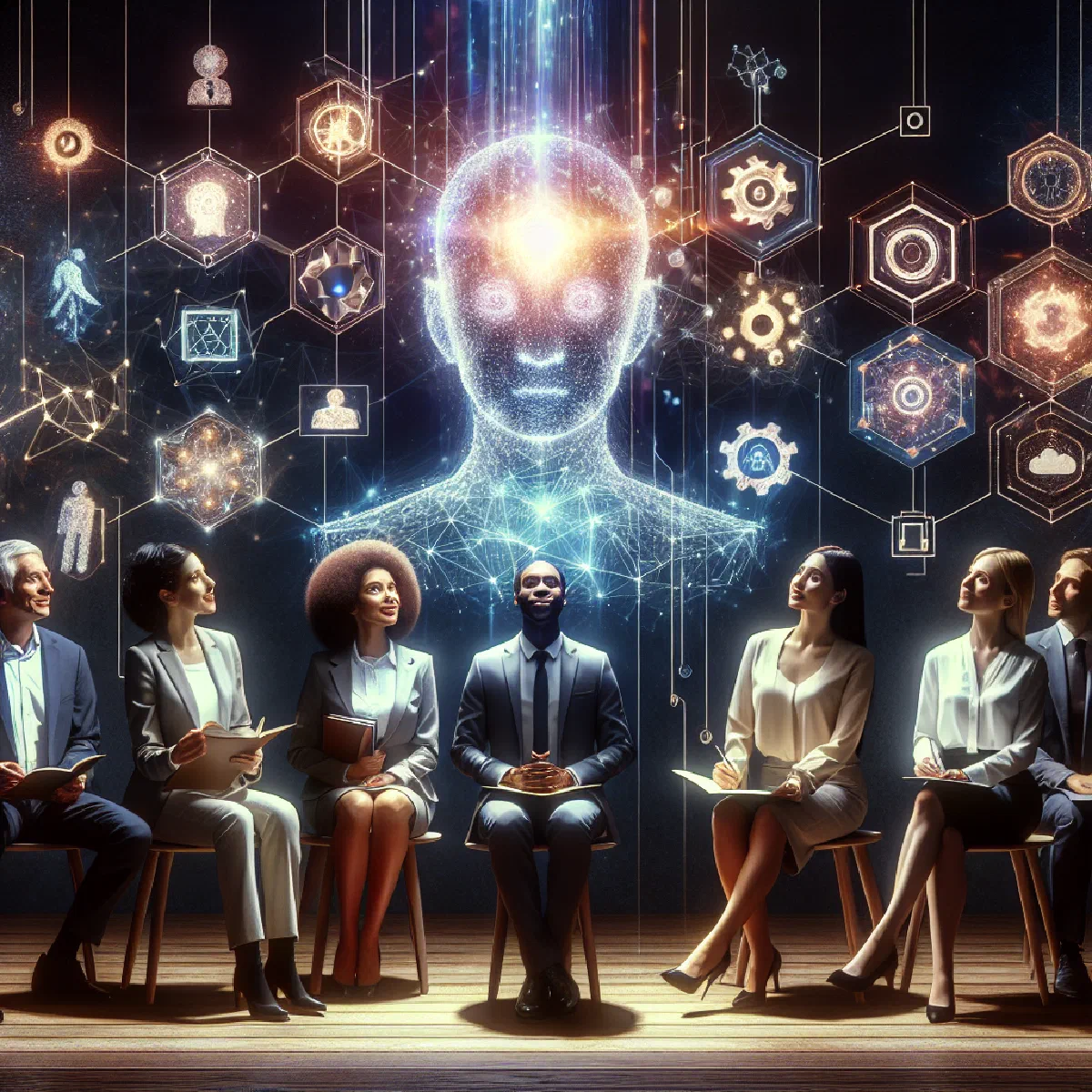
Transform professional and continuing education with AI-driven coaching, offering personalized support, accountability, and skill mastery at scale.
Introduction
In continuing education, learning doesn’t end when the course is completed. Professionals, executives, and lifelong learners often require months of follow-up, guidance, and reinforcement to fully integrate new knowledge into their work and personal lives. Traditionally, human coaches have filled this role—whether in leadership development, career advancement, corporate training, or personal growth. However, the cost and accessibility of one-on-one coaching remain significant barriers. AI-driven coaching has the potential to bridge this gap, providing continuous, personalized support at scale.
The role of coaching in lifelong learning
Professional and personal coaching serves three primary functions:
Follow-up and Reinforcement – Ensuring that learners apply new knowledge and maintain accountability.
Support and Encouragement – Helping individuals navigate challenges, adapt strategies, and stay motivated.
Skill Development and Mastery – Offering ongoing feedback, practice exercises, and real-world application insights.
For organizations, coaching improves employee retention, leadership development, and workplace performance, while for individuals, it enhances goal-setting, decision-making, and career transitions. The challenge, however, has always been scale—providing sustained, high-quality coaching to large numbers of learners is prohibitively expensive.
How AI can fill the coaching gap
AI-powered coaching systems can deliver structured, personalized, and ongoing support in a way that traditional coaching cannot. Here’s how AI can transform professional and personal development:
1. intelligent follow-up systems
AI can track progress and suggest personalized action steps post-training.
Automated reminders help learners revisit key concepts at spaced intervals.
AI can identify when learners struggle and recommend additional resources or exercises.
2. conversational AI for real-time guidance
AI-driven chatbots can act as virtual mentors, answering questions and providing feedback.
Natural language processing enables AI to engage in dynamic, contextual coaching conversations.
Personalized AI assistants can mimic the responsiveness of a human coach, providing targeted advice and encouragement.
3. adaptive learning and skill reinforcement
AI can assess knowledge retention and suggest customized refresher courses.
It can simulate real-world challenges, allowing learners to practice problem-solving in a controlled setting.
AI-powered simulations can provide realistic leadership, negotiation, or technical skill-building exercises.
4. emotionally intelligent AI as an encourager
AI models are increasingly capable of detecting sentiment in text-based interactions.
AI-driven coaching tools can provide motivational nudges, reminders of past successes, and encouragement based on progress.
Personalized feedback loops ensure that learners feel supported and recognized for their efforts.
The future of ai-driven coaching
AI coaching is not about replacing human mentors—it is about augmenting and extending their reach. In a hybrid model, AI can handle routine coaching tasks, allowing human coaches to focus on deeper, more complex conversations. The future of AI coaching could include:
AI-driven peer coaching networks that connect learners with similar challenges.
Blended AI-human coaching programs where AI handles foundational coaching, and humans step in for advanced guidance.
Long-term AI coaching assistants that adapt as individuals progress in their careers and personal development journeys.
Conclusion
AI has the potential to make coaching accessible, continuous, and scalable. By providing structured follow-up, real-time support, adaptive learning, and encouragement, AI-driven coaching can help learners apply knowledge effectively, stay motivated, and achieve their goals—all at a fraction of the cost of traditional coaching. As AI coaching systems become more advanced, they will play an increasingly vital role in education, professional development, and lifelong learning.
Why customer tools are organized wrong
This article reveals a fundamental flaw in how customer support tools are designed—organizing by interaction type instead of by customer—and explains why this fragmentation wastes time and obscures the full picture you need to help users effectively.
Infrastructure shapes thought
The tools you build determine what kinds of thinking become possible. On infrastructure, friction, and building deliberately for thought rather than just throughput.
Server-side dashboard architecture: Why moving data fetching off the browser changes everything
How choosing server-side rendering solved security, CORS, and credential management problems I didn't know I had.
The work of being available now
A book on AI, judgment, and staying human at work.
The practice of work in progress
Practical essays on how work actually gets done.
The inbox nobody reads is the one that matters
Every organization has a monitoring system that works perfectly and reports to nobody. The gap between having information and acting on it is where most failures actually live.
The best customers are the first ones you turn against
Every subscription makes a bet that most customers won't use what they're paying for. The customer who closes that gap becomes a problem to be managed.
Delegation without comprehension is just prayer
The organizations that survive won't be the ones that automated the most. They'll be the ones that figured out what to stop delegating.
From content creation to course customization: How AI is powering hyperpersonalized learning
Unlock the future of education with AI-driven tools that enable hyperpersonalized learning, transforming content creation and course customization for every...
Mastering career growth: Harnessing continuous learning and adaptability
Unlock career growth by embracing continuous learning and adaptability in a fast-changing job market. Cultivate curiosity for lasting success.
Collaborative intelligence: Harnessing AI to amplify human potential
Discover how to leverage AI to boost efficiency and productivity, transforming everyday tasks and amplifying human potential in the workplace.