Article analysis: Dario Amodei — Machines of loving grace
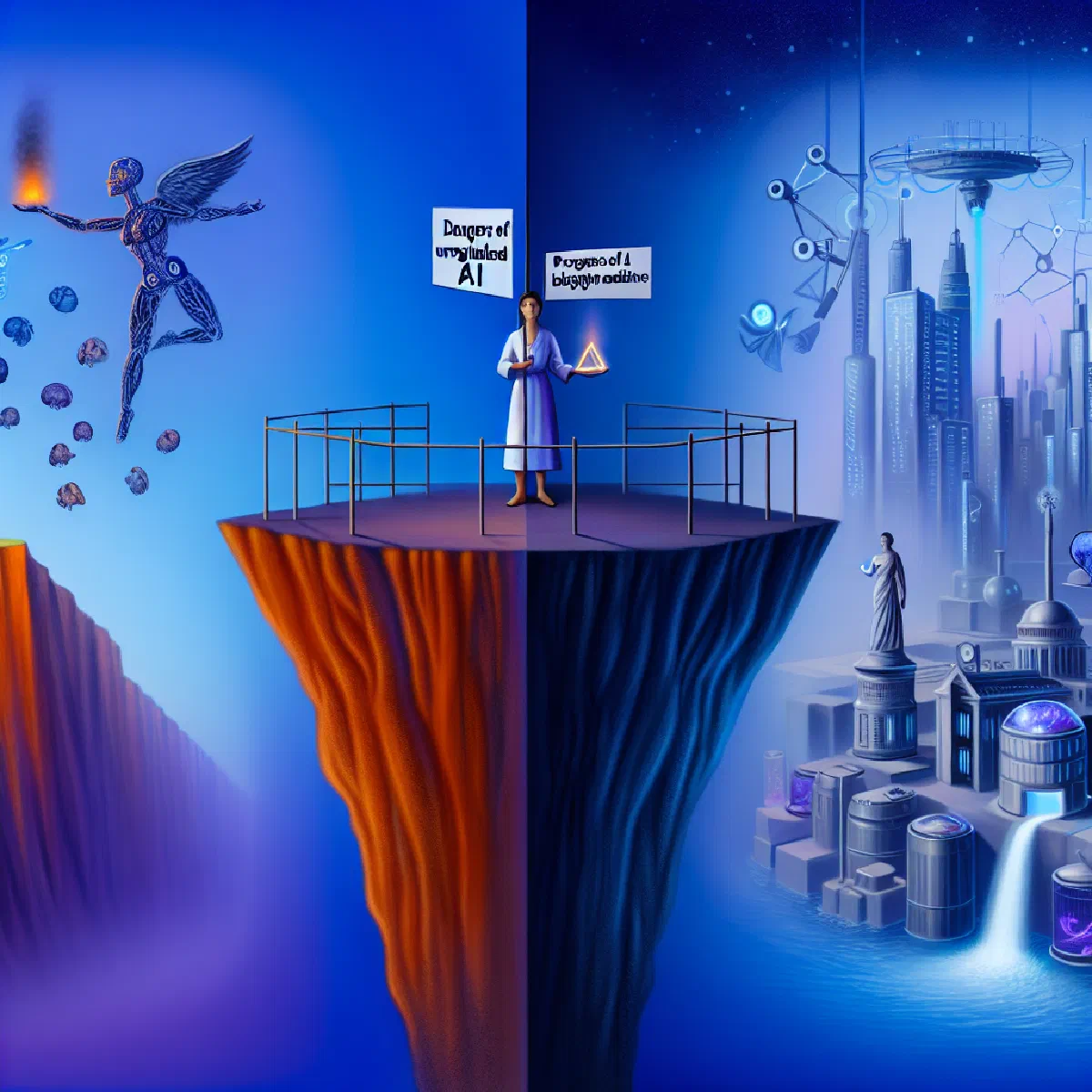
Explore Dario Amodei's vision of AI as a transformative ally, enhancing health, economy, and democracy while fostering human progress and innovation.
“I think that most people are underestimating just how radical the upside of AI could be, just as I think most people are underestimating how bad the risks could be.”
Summary
In Dario Amodei’s essay “Machines of Loving Grace,” the central thesis argues that the potential benefits of powerful AI far outweigh the risks if managed correctly, presenting a transformative and optimistic vision for the future. Amodei, CEO of Anthropic, challenges the perception of him as an AI pessimist by outlining a scenario where AI functions as an ally in advancing human progress, not a threat. He details five key areas where AI could dramatically improve human life: biology and physical health, neuroscience and mental health, economic development, peace and governance, and work and meaning. In biology, AI could condense a century of advancements into just a decade, revolutionizing disease prevention and extending human lifespans. Neuroscience could see AI curing mental illnesses and enhancing cognitive freedom. Economically, AI could help bridge global inequality, offering developing nations a chance to leapfrog into prosperity. Politically, the appropriate deployment of AI could bolster democracy and human rights, countering authoritarian tendencies. In terms of work and meaning, although AI might supplant some human labor, Amodei suggests a future where humans derive purpose outside traditional economic roles. This optimistic narrative aligns with the editorial perspective that AI acts as a tool for augmentation, democratizing access, enhancing productivity, and fostering innovation through human-AI collaboration, thus painting a future where technological progress interfaces harmoniously with human development.
Analysis
Amodei’s essay presents a compelling vision for AI’s transformative potential, aligning with the view of AI as an augmentation tool that enhances productivity and democratizes access. His structured approach offers substantial insights into the radical improvements AI could bring in diverse fields, supporting the tech-forward thinking that AI is a crucial driver of future progress. However, while emphasizing AI’s potential, the essay occasionally falls into optimism without sufficiently addressing underlying challenges. For instance, the assumption that AI can compress 100 years of biological progress into a decade lacks detailed exploration of the practical constraints, such as experimental latency and societal acceptance, which require more realistic assessment. Furthermore, the claim of AI’s capacity to globally alleviate poverty and foster democracy is optimistic but underexplored; it surmises that intelligence alone can overcome entrenched socio-political barriers without comprehensive strategies for implementation. This broad optimism does not fully engage with the complexities of workforce adaptability or the societal ramifications of rapid AI integration. While Amodei acknowledges the need for hope amid discussing risks, some proposed solutions may benefit from further substantiation through empirical data and historical precedent, ensuring the vision is not only aspirational but actionable.
Why customer tools are organized wrong
This article reveals a fundamental flaw in how customer support tools are designed—organizing by interaction type instead of by customer—and explains why this fragmentation wastes time and obscures the full picture you need to help users effectively.
Infrastructure shapes thought
The tools you build determine what kinds of thinking become possible. On infrastructure, friction, and building deliberately for thought rather than just throughput.
Server-side dashboard architecture: Why moving data fetching off the browser changes everything
How choosing server-side rendering solved security, CORS, and credential management problems I didn't know I had.
The work of being available now
A book on AI, judgment, and staying human at work.
The practice of work in progress
Practical essays on how work actually gets done.
The inbox nobody reads is the one that matters
Every organization has a monitoring system that works perfectly and reports to nobody. The gap between having information and acting on it is where most failures actually live.
The best customers are the first ones you turn against
Every subscription makes a bet that most customers won't use what they're paying for. The customer who closes that gap becomes a problem to be managed.
Delegation without comprehension is just prayer
The organizations that survive won't be the ones that automated the most. They'll be the ones that figured out what to stop delegating.
Why business leaders are losing trust in it: Analyzing IBM’s latest study
Business leaders are losing trust in IT as effectiveness declines. Discover insights from IBM's latest study and explore the reasons behind this shift.
Article analysis: 3 AI competencies you need now for the future
Master essential AI competencies to thrive in an evolving landscape and ensure your career remains irreplaceable in the age of artificial intelligence.
Article analysis: Computer use (beta)
Explore the capabilities and limitations of Claude 3.5 Sonnet's computer use features, and learn how to optimize performance effectively.