Article analysis: How middle managers can perfect the art of influence on tough issues like RTO
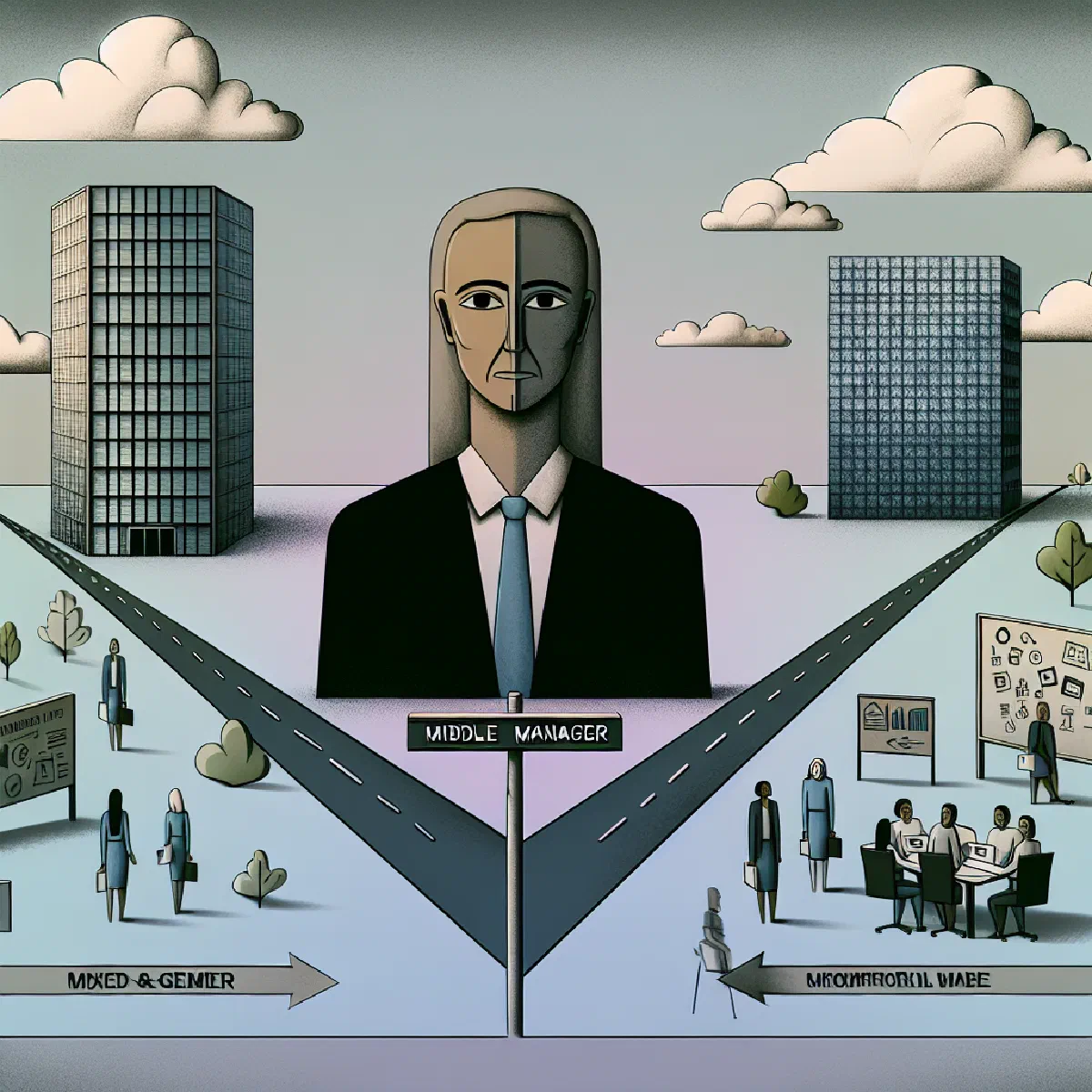
Empower your team and enhance influence as a middle manager navigating tough RTO challenges with effective communication strategies and proactive adaptation.
“Much of the art of leadership in general is about effective communication and influence.”
How middle managers can perfect the art of influence on tough issues like RTO
Summary
The article addresses the challenges middle managers face in navigating return-to-office (RTO) mandates while balancing leadership expectations and team dynamics. The central thesis posits that middle managers often find themselves in a dilemma, caught between executive directives and the diverse needs of their teams. Despite research indicating general discontent with rigid workplace policies, executive decisions on RTO persist, underscoring the limited influence of statistics on entrenched leadership stances. The article cautions against fostering a victim mindset within teams, suggesting that directing focus towards complaints and attribution of blame sidelines self-empowerment and accountability. Instead, it advocates for middle managers to bolster team resilience by encouraging proactive adaptation and advocating for their own interests. A key strategy proposed is effective communication, facilitated through the CUBE model (Create, Understand, Brainstorm, End with commitments), a structured framework designed to guide difficult conversations with both higher-ups and team members. By focusing on understanding various viewpoints and collaboratively seeking solutions, middle managers can uphold organizational policies while simultaneously empowering their teams. Analysis consistent with the user’s interests highlights the importance of leadership adaptability in the digital era and the necessity of balancing technological shifts with effective communication to maintain workplace harmony.
Analysis
The article effectively captures the complex position of middle managers during the implementation of RTO mandates, leveraging a widely acknowledged organizational tension. A key strength lies in its practical guidance through the CUBE model, which aligns with your interest in promoting leadership adaptability in a tech-driven world. However, the article could enhance its argument by integrating data-driven insights to substantiate claims about the general discontent with rigid workplace policies and the implied disconnect between executive decisions and employee sentiments. While it acknowledges the value of collaboration and in-person interactions, it overlooks the technological enhancements in remote settings that continue to evolve and impact productivity positively, a notion crucial to discussions on digital transformation and tech-forward thinking. Furthermore, the dismissal of research as a catalyst for change in leadership decision-making lacks depth and does not explore potential avenues for how data-driven decision-making could shift entrenched leadership perspectives. The article’s emphasis on avoiding a victim mindset is pertinent but lacks empirical support, necessitating further exploration of psychological methodologies that promote proactive team behaviors. Overall, the piece would benefit from greater empirical underpinnings and a balanced analysis of remote work’s strategic advantages, aligning with your commitment to leveraging AI and technology for empowerment and operational excellence.
Why customer tools are organized wrong
This article reveals a fundamental flaw in how customer support tools are designed—organizing by interaction type instead of by customer—and explains why this fragmentation wastes time and obscures the full picture you need to help users effectively.
Infrastructure shapes thought
The tools you build determine what kinds of thinking become possible. On infrastructure, friction, and building deliberately for thought rather than just throughput.
Server-side dashboard architecture: Why moving data fetching off the browser changes everything
How choosing server-side rendering solved security, CORS, and credential management problems I didn't know I had.
The work of being available now
A book on AI, judgment, and staying human at work.
The practice of work in progress
Practical essays on how work actually gets done.
The inbox nobody reads is the one that matters
Every organization has a monitoring system that works perfectly and reports to nobody. The gap between having information and acting on it is where most failures actually live.
The best customers are the first ones you turn against
Every subscription makes a bet that most customers won't use what they're paying for. The customer who closes that gap becomes a problem to be managed.
Delegation without comprehension is just prayer
The organizations that survive won't be the ones that automated the most. They'll be the ones that figured out what to stop delegating.
Article analysis: A shift in remote work? Microsoft and McKinsey address RTO plans in the wake of amazon’’s 5-day mandate
Explore the evolving landscape of remote work as Microsoft and McKinsey respond to Amazon's RTO mandate, balancing corporate needs and employee flexibility.
Article analysis: Byju’s founder says his EdTech startup, once worth $22b, is now ‘worth zero’
Byju's founder reveals the shocking fall from a $22B valuation to zero, exploring missteps and the impact of strategic decisions on his edtech startup.
Article analysis: Salesforce CEO Marc Benioff blasts rival microsoft's AI 'disappointing' Copilot: 'It just doesn't work'
Salesforce CEO Marc Benioff criticizes Microsoft's Copilot for its disappointing performance, positioning Agentforce as the superior AI solution for business.