Bookmark: Frustrated with today's 'attention economy'? You're really going to hate what comes next
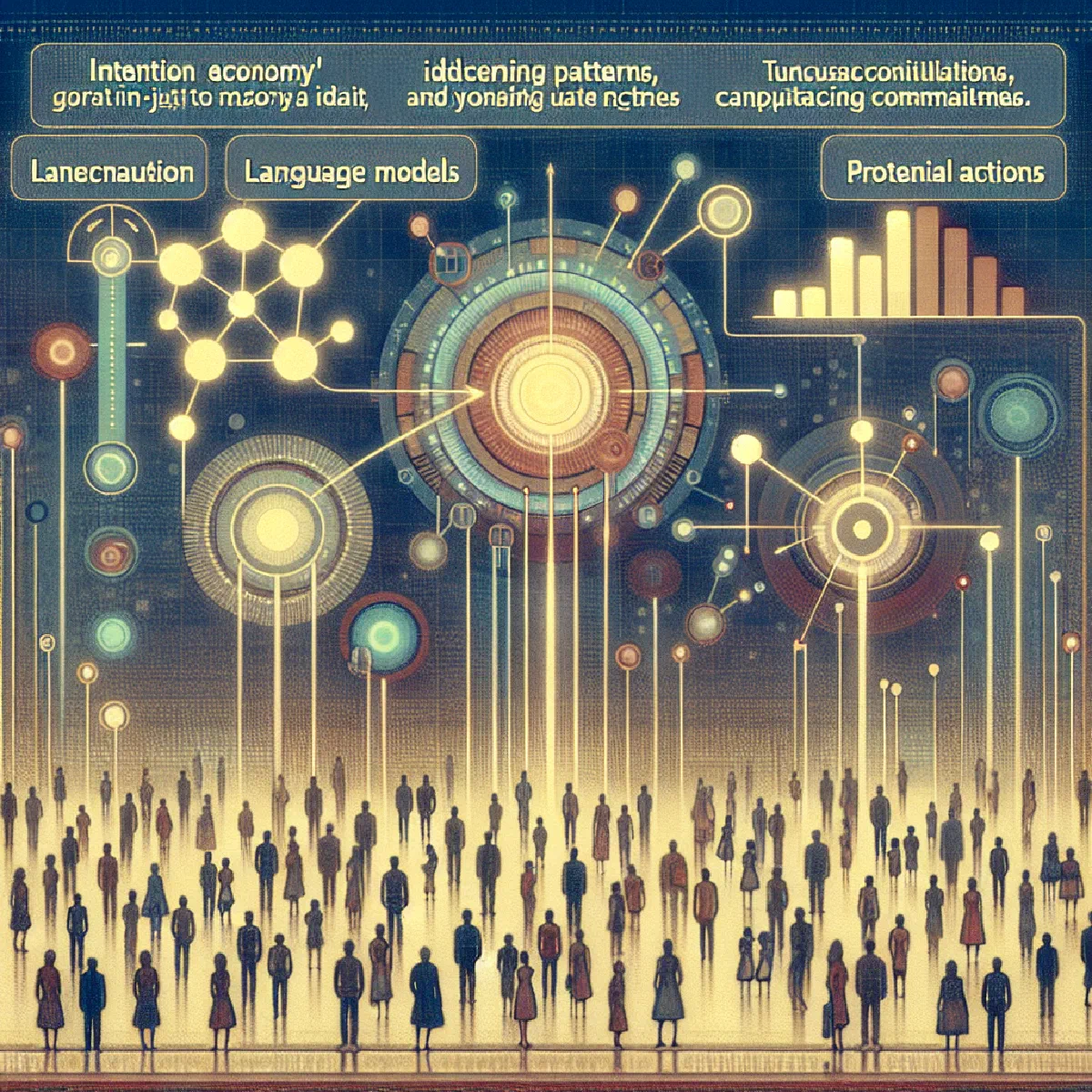
Explore the rise of the intention economy and its privacy risks, driven by AI advancements that predict and monetize your future choices.
The concept of the “intention economy” refers to a digital market where companies prioritize predicting and monetizing individuals’ future behaviors and decisions rather than simply capturing their current attention. This emerging economic model is driven largely by advancements in AI, particularly through the deployment of AI chatbots and large language models (LLMs). These technologies gather and analyze user data to discern patterns, motivations, and potential actions, which are then commodified. The “attention economy,” by contrast, focuses on captivating consumer attention to sell ad space or products. The concern with the intention economy is its profound privacy implications, as it shifts control over personal data and foresight to corporate entities. Protection against such encroachments involves vigilant safeguarding of personal data, critically assessing consent terms, and fostering greater regulatory oversight to ensure ethical data use practices. Additionally, individuals need to be conscious of their engagements with AI tools and platforms, recognizing that even seemingly benign interactions may contribute to this predictive commodification.
Nobody takes you aside anymore
Print taught a generation when to stop. What we lose when the machines absorb the constraints that used to form us.
Your AI agents need a water cooler
Coordination is a property of the room, not the org chart. What that means when your coworkers are agents.
On the death of the author and the birth of the detector
Why worrying about AI authorship is lazier, and more prejudiced, than it looks.
The work of being available now
A book on AI, judgment, and staying human at work.
The practice of work in progress
Practical essays on how work actually gets done.
AI didn’t deskill us, we were already deskilled
This article challenges the narrative that AI is deskilling workers, instead highlighting how many jobs were already mechanical. It offers a thought-provoking perspective on how AI could be an opportunity to reclaim and enhance human skills.
Redefining leadership: Embracing human judgment amid AI disruption
This article offers a critical perspective on how AI is reshaping the job market and challenges leaders to focus on uniquely human skills like judgment and responsibility, providing valuable insights for anyone interested in the future of work and leadership.
AI slop: The hidden cost of poor integration
This article challenges the notion that job crafting is the key to successful AI integration, offering a fresh perspective on the importance of a clear strategy to prevent chaos and enhance organizational efficiency.