By comprehending their personality type, companies can deploy generative AI automation solutions tailored to their specific needs.
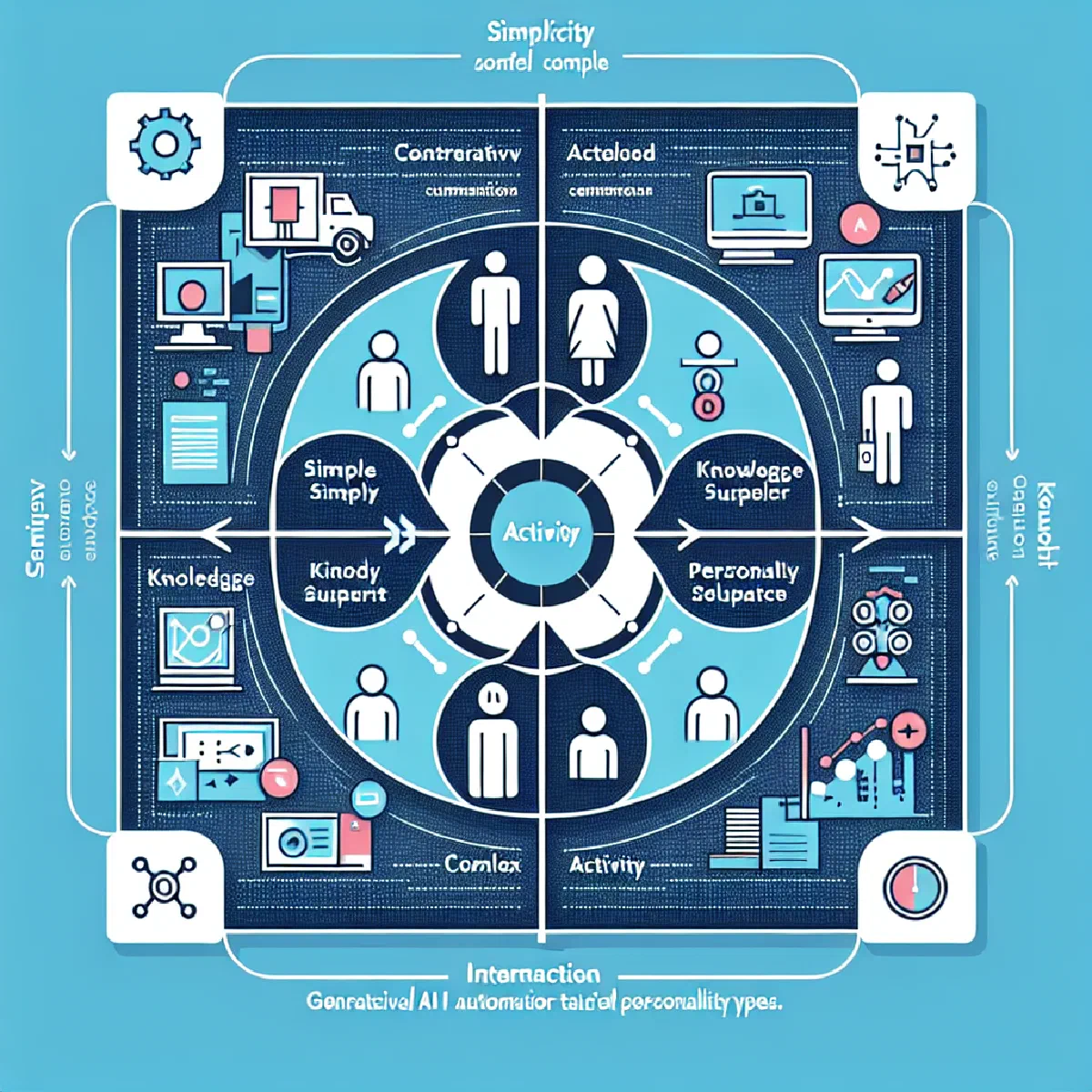
Discover how understanding customer support personality types can help businesses implement tailored generative AI solutions for effective automation.
The web article discusses the four personality types of customer support automation. It introduces a framework based on two fundamental axes: “Simplicity” and “Activity.” The “Simplicity” axis measures the complexity of customer support tickets, ranging from simple issues that can be easily automated to complex issues that require skilled human agents. The “Activity” axis measures the level of action or interaction necessary to resolve support tickets, ranging from knowledge-based requests to actions that involve multiple systems. The intersection of these axes creates four quadrants that determine a company’s “Customer Support Personality.” The article then explores how different types of generative AI can serve each personality type. It discusses generative AI capabilities such as writing FAQs, acting as chatbots or intelligent agents, classifying and routing tickets, and assisting human agents. The article concludes by emphasizing the importance of choosing a generative AI suite that aligns with a business’s unique characteristics and can scale with its needs.
Nobody takes you aside anymore
Print taught a generation when to stop. What we lose when the machines absorb the constraints that used to form us.
Your AI agents need a water cooler
Coordination is a property of the room, not the org chart. What that means when your coworkers are agents.
On the death of the author and the birth of the detector
Why worrying about AI authorship is lazier, and more prejudiced, than it looks.
The work of being available now
A book on AI, judgment, and staying human at work.
The practice of work in progress
Practical essays on how work actually gets done.
Artificial intelligence could hit three in five workers — Possibly replacing their jobs. The warning comes in a new international monetary fund report on the future of work. It warned of lower sala…
AI could replace three in five workers, warns an IMF report, signaling potential job loss and lower salaries. Discover the implications for the future of work.
Atlassians choose where they work, every single day. Download our free report to see what we’ve learned as a result.
Explore Atlassian's insights on flexible work policies and employee satisfaction. Download the free report to learn from their distributed work experience.
The question over whether to allow employees to work from home has been settled. here’s the new normal.
Explore why the shift back to office work may fail as data supports remote work's benefits for productivity and employee well-being.