Polymathic Blog
Digital transformation, higher education, innovation, technology, professional skills, management, and strategy

Management: management

59 posts tagged with "management"

Every executive in the C suite is braced for AI impacts within their organization. But are they ready for their own jobs to be impacted too?

The C-suite is bracing for the impact of AI within their organizations, but are they prepared for their own jobs to be impacted? According to a report by Workday, half of CEOs say their organization is at least somewhat unprepared for AI and machine learning adoption. However, decision-makers are generally optimistic about their organization’s ability to adapt. CEOs believe that AI will significantly amplify human potential. To master the changes AI enables, C-suite executives need to augment their decision-making with AI. The study also found that the ability to work closely with new … read more >

Accenture’s Manish Sharma says those who don’t go all-in on GenAI this year risk falling behind their rivals as it's set to impact 40% of working hours

Accenture’s CEO of North America, Manish Sharma, believes that companies who do not fully embrace and invest in artificial intelligence (AI) technologies risk falling behind their competitors. Accenture itself is in the process of investing $3 billion over three years to expand its AI capabilities. Sharma highlights the potential impact of large language models like ChatGPT and Google Bard on working hours, estimating that they could impact 40% of working hours. He also emphasizes the importance of addressing bias in AI models and the need for scalability in AI deployment. Overall, … read more >

Organizations that follow a progression of steps to achieve digital excellence may see improvements in effectiveness, productivity, performance, and more.

The article discusses the steps organizations can take to achieve excellence in digital delivery and maximize performance outcomes. The research, conducted by McKinsey, collected data from over 1,700 teams in various industries across the globe. The article identifies 19 capabilities grouped into five categories: strategy, structure, people practices and culture, process, and technology. These capabilities drive team-level performance beyond raw talent. The article emphasizes the importance of mindset shifts and structural changes in organizations to fully realize the benefits of agile and … read more >

Learn how to engage consumers, influence decisions and create brand loyalty.

This article highlights the importance of data storytelling for marketers to effectively engage consumers and influence their decisions. Data storytelling involves presenting complex information in a relatable and compelling format. It helps in creating brand loyalty and increasing conversions. The article promotes a 20-minute data storytelling masterclass by experts from Marigold, aiming to teach marketers how to utilize data storytelling to enhance their marketing strategies.

https://searchengineland.com/join-a-masterclass-on-data-storytelling-435882

 read more >

Leaders are in a losing battle with their employees over office attendance.

Leaders are in a losing battle with their employees over office attendance. Corporate leaders and their employees are in a fight for the soul of the workplace. For many of us, the outcome will define our work life for decades.

https://www.usnews.com/opinion/articles/2023-10-03/it-is-time-to-end-the-war-on-remote-work

 read more >

The Complementary Role of AI

The web article discusses the role of AI-based tools in relation to human intelligence. It highlights that while AI has transformed various industries, including HR, it should be viewed as a complementary tool rather than a substitute for human professionals. The article emphasizes that AI can enhance productivity and provide valuable data-driven insights, but it cannot fully replace human involvement. It mentions that organizations are increasingly using AI to streamline operations, improve talent acquisition, enhance employee engagement, and make data-driven HR decisions. However, it also … read more >

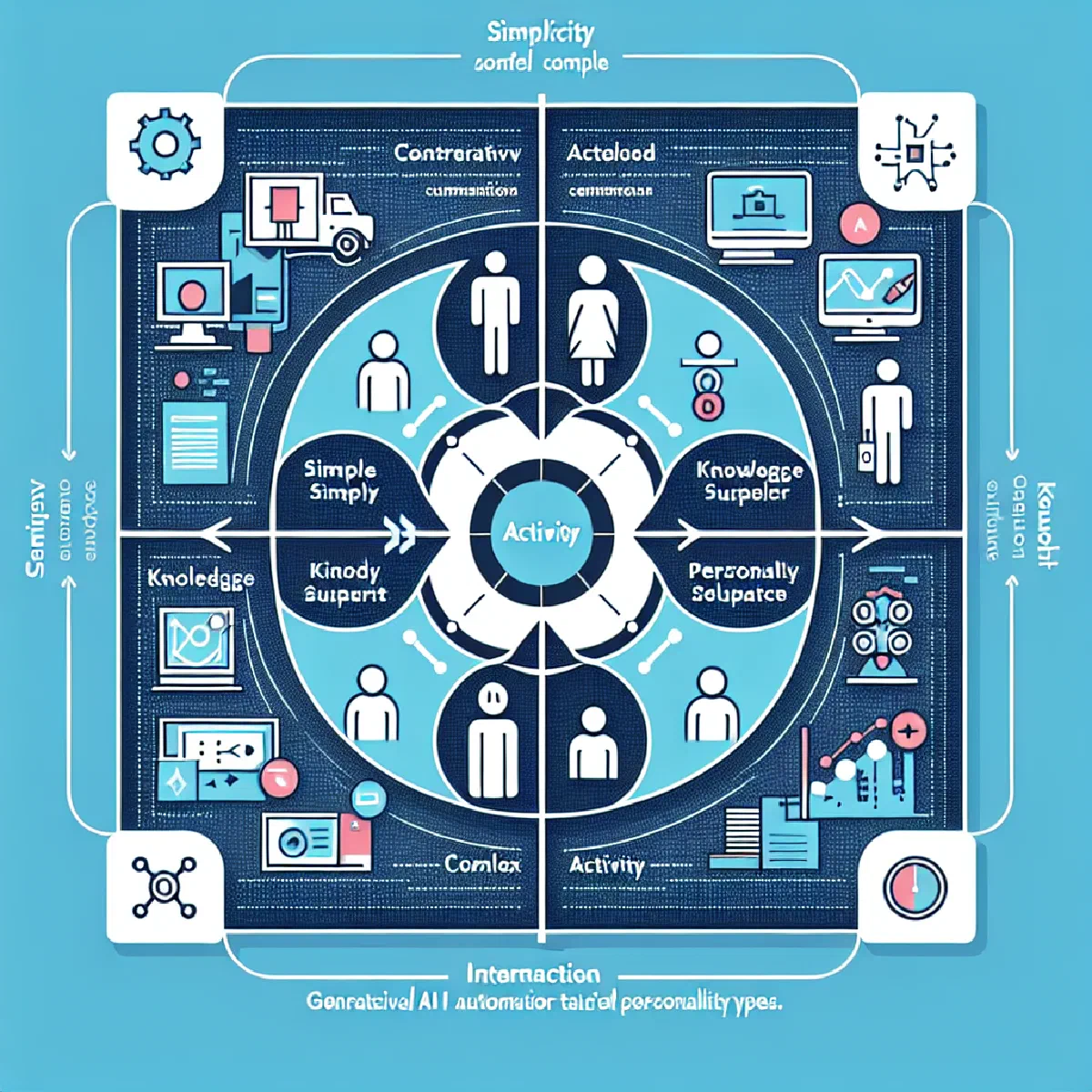
By comprehending their personality type, companies can deploy generative AI automation solutions tailored to their specific needs.

The web article discusses the four personality types of customer support automation. It introduces a framework based on two fundamental axes: “Simplicity” and “Activity.” The “Simplicity” axis measures the complexity of customer support tickets, ranging from simple issues that can be easily automated to complex issues that require skilled human agents. The “Activity” axis measures the level of action or interaction necessary to resolve support tickets, ranging from knowledge-based requests to actions that involve multiple systems. The … read more >

What can leaders do to implement AI in a way that enables people to do their best work, instead of substituting talent or compromising ethics? Read on for six strategies.

The insights in this article include:

1. AI can make work more enjoyable for employees and free them up for creative pursuits. 2. AI can provide real-time market insights for confident decision-making that can yield profits. 3. AI-driven predictive analytics can enhance the accuracy of predictions and provide timely and relevant insights for the retail industry. 4. Employees should remain in charge of collaborations and responsible for accuracy and quality when using AI. 5. Training for necessary tech skills and promoting a culture of lifelong learning can sustain an AI-powered workforce. 6. …

 read more >

Let's embark on a journey to explore not just the current applications, but the future implications of AI in reshaping talent management.

The article discusses how AI is evolving in the field of talent management and human resources. It explains how AI is being used for skills mapping to understand employees’ competencies and guide training and development. AI talent platforms analyze employee profiles, skills, achievements to match people with the right roles and projects. These platforms also facilitate internal mobility by identifying suitable next moves for employees.

A contrarian insight is that while AI promises enhanced efficiency, productivity and fairness in talent management, there are also risks around privacy, …

 read more >

Above all, leaders need to show their people that knowledge management is a key priority—AI or no AI.

The article discusses the challenges that leaders face in managing knowledge within organizations and how generative AI can revolutionize knowledge management. Many companies have a wealth of knowledge but struggle to make it accessible to employees. Generative AI tools have the potential to solve this problem by creating, storing, and distributing knowledge effectively. For example, AI can generate content for organizational use by combining existing information, extract knowledge from large datasets, and facilitate communication between workers and knowledge systems. However, AI alone is not … read more >