How generative AI enhances job roles and fosters creativity in the workplace
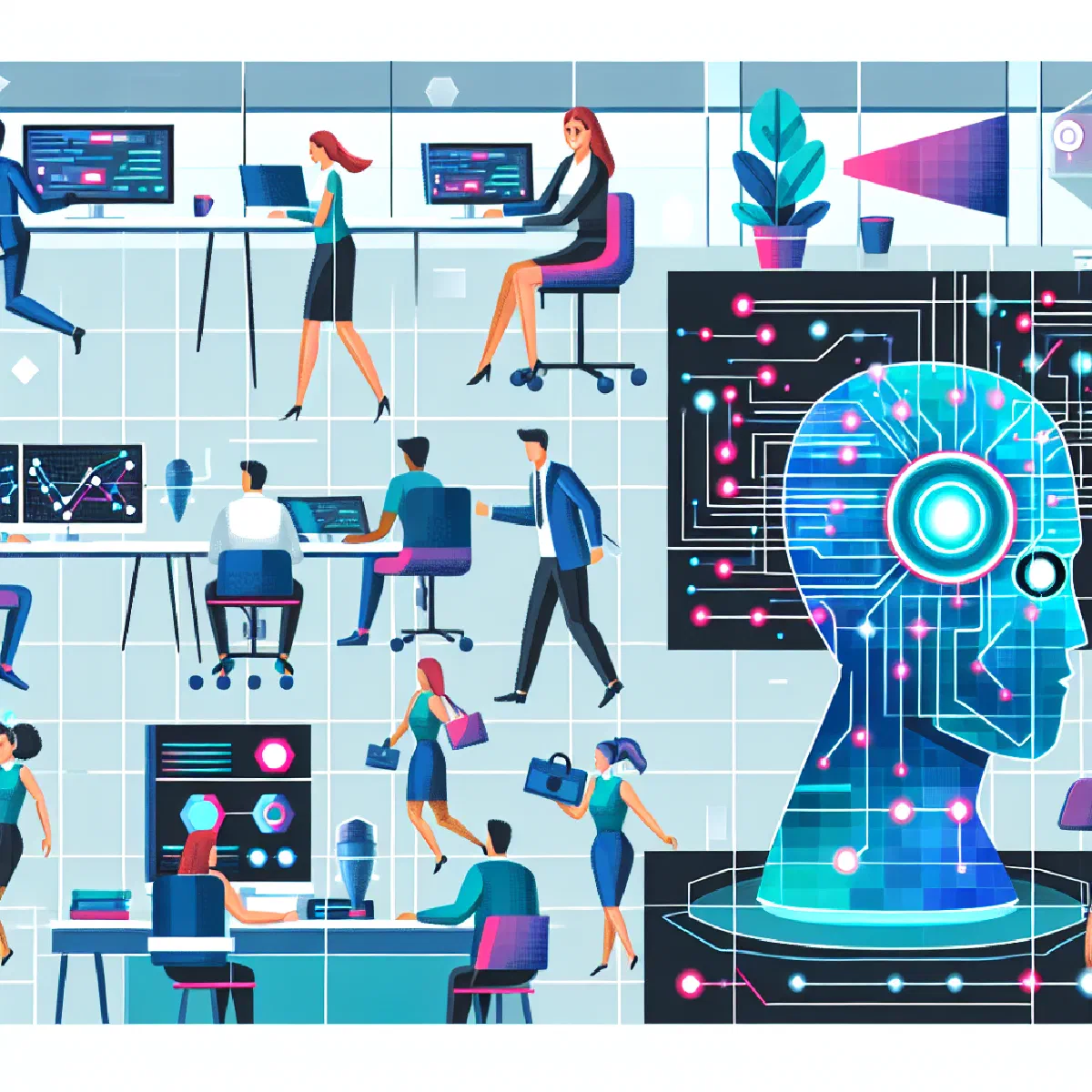
Discover how generative AI enhances creativity and boosts efficiency in the workplace, empowering employees to excel in their roles and future-proofing careers.
“We need to establish ways to bring the best out of machines and humans working together, rather than focusing on how one can outperform the other.”
Reckitt CMO: AI is already making marketers better and faster
Examining the potential of generative AI in the workplace
The article posits that generative AI (GenAI) offers substantial benefits to human roles, extending beyond fears of job displacement. Instead, it highlights how GenAI can automate repetitive tasks, allowing employees to focus on creativity and strategic planning.
Supporting evidence and implementation
Evidence from a Boston Consulting Group survey reveals that AI-assisted employees are not only 25% faster but also produce higher quality work by 40%. At Reckitt, GenAI is employed for one-third of marketing tasks, freeing up time for more strategic pursuits.
Innovations in product development
Reckitt’s pilot projects demonstrate that GenAI can cut concept development time by up to 60%, leading to significant quality improvements. Furthermore, GenAI’s ability to adapt marketing assets for different regions resulted in a 30% time reduction and increased consistency in asset quality.
Future-proofing workforce
The article underscores the importance of equipping employees with GenAI skills, enhancing their job security and excitement about future roles. This proactive approach positions employees as valuable assets in tomorrow’s economy.
Contrarian perspectives
Contrary to mainstream fears of AI-induced job loss, the article presents an optimistic view of AI as a tool for job enrichment. This perspective is supported by evidence of improved efficiency and job satisfaction within companies like Reckitt.
Critical analysis
Strengths of the article include evidence-based claims and a balanced perspective on AI’s role in augmenting human abilities. However, it lacks a thorough exploration of potential challenges such as AI bias and the need for extensive retraining programs. Additionally, results from specific case studies may not be universally applicable.
Conclusion
The article convincingly argues for a collaborative relationship between humans and AI, emphasizing mutual enhancement. For a comprehensive understanding, it should address implementation challenges and ensure ethical AI deployment. Embracing GenAI thoughtfully can lead to a more innovative and efficient workforce.
Why customer tools are organized wrong
This article reveals a fundamental flaw in how customer support tools are designed—organizing by interaction type instead of by customer—and explains why this fragmentation wastes time and obscures the full picture you need to help users effectively.
Infrastructure shapes thought
The tools you build determine what kinds of thinking become possible. On infrastructure, friction, and building deliberately for thought rather than just throughput.
Server-side dashboard architecture: Why moving data fetching off the browser changes everything
How choosing server-side rendering solved security, CORS, and credential management problems I didn't know I had.
The work of being available now
A book on AI, judgment, and staying human at work.
The practice of work in progress
Practical essays on how work actually gets done.
The inbox nobody reads is the one that matters
Every organization has a monitoring system that works perfectly and reports to nobody. The gap between having information and acting on it is where most failures actually live.
The best customers are the first ones you turn against
Every subscription makes a bet that most customers won't use what they're paying for. The customer who closes that gap becomes a problem to be managed.
Delegation without comprehension is just prayer
The organizations that survive won't be the ones that automated the most. They'll be the ones that figured out what to stop delegating.
Article analysis: 5 things content marketers shouldn’t be afraid of doing
Boost your content marketing by embracing fears—engage customers, optimize existing content, seek feedback, ensure originality, and collaborate effectively.
Article analysis: Rewriting the playbook: 5 SaaS companies defining the next generation of content marketing
Discover how five SaaS companies are revolutionizing content marketing with authentic, reader-focused strategies that simplify and engage.
Article analysis: Mastering the human-AI balance in marketing: Insights and strategies
Master the art of blending AI with human creativity in marketing to drive deeper connections and enhance your team's effectiveness.