It’s going to take a century for artifical intelligence to be able to perform most human jobs. But there are going to be some key developments during the next decade.
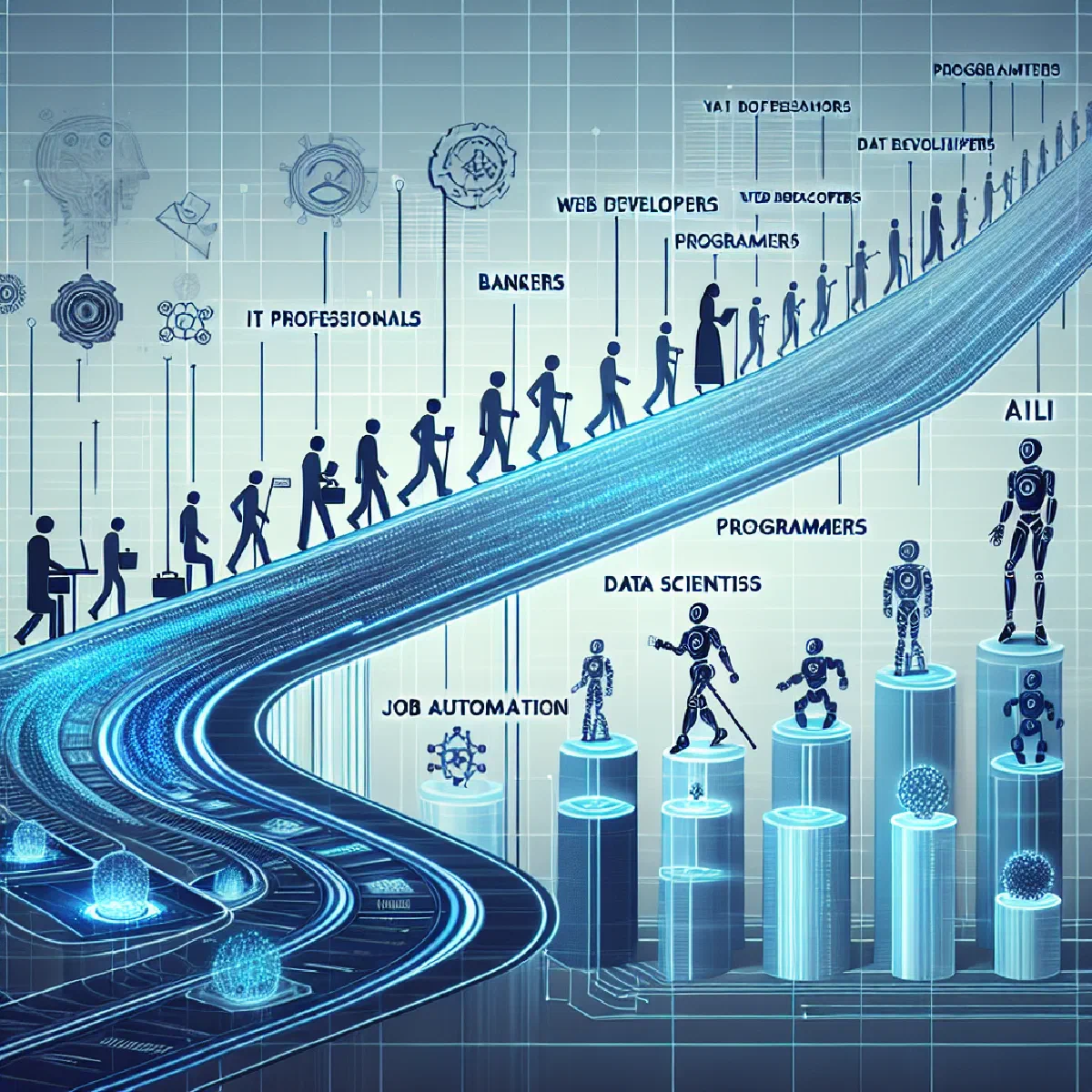
Explore how AI will transform jobs in the next decade, from enhancing security to automating coding, reshaping the future of work.
According to a survey of leading AI researchers, all human tasks may become highly automatable by 2116. While this prediction seems far off, it is worth noting that it has been moved up by 50 years from the original estimate of 2164. Short-term developments are also expected to reshape IT and business professionals’ jobs within the next five to 10 years. The survey highlights several capabilities that AI will achieve in the near future, including finding and patching security flaws, building websites, offering phone banking services, writing Python code, finetuning large language models, and conducting machine-learning studies and writing papers. The researchers attribute the development of AI to the drop in computing costs.
https://www.zdnet.com/article/this-is-what-ai-will-produce-during-the-next-decade-and-beyond/
Nobody takes you aside anymore
Print taught a generation when to stop. What we lose when the machines absorb the constraints that used to form us.
Your AI agents need a water cooler
Coordination is a property of the room, not the org chart. What that means when your coworkers are agents.
On the death of the author and the birth of the detector
Why worrying about AI authorship is lazier, and more prejudiced, than it looks.
The work of being available now
A book on AI, judgment, and staying human at work.
The practice of work in progress
Practical essays on how work actually gets done.
Many businesses are not yet prepared to fully reap the benefits of AI.
Unlock AI's true potential for your business by integrating it into your strategy, boosting productivity, and enhancing customer experiences.
Rose-tinted predictions for artificial intelligence’s grand achievements will be swept aside by underwhelming performance and dangerous results.
Explore the reality of generative AI in 2024 as hype fades, revealing limitations, job displacement, and the need for regulation.
Artificial intelligence could hit three in five workers — Possibly replacing their jobs. The warning comes in a new international monetary fund report on the future of work. It warned of lower sala…
AI could replace three in five workers, warns an IMF report, signaling potential job loss and lower salaries. Discover the implications for the future of work.