Previous research by international labour organisation shows that various jobs will likely be replaced rather than improved by AI.
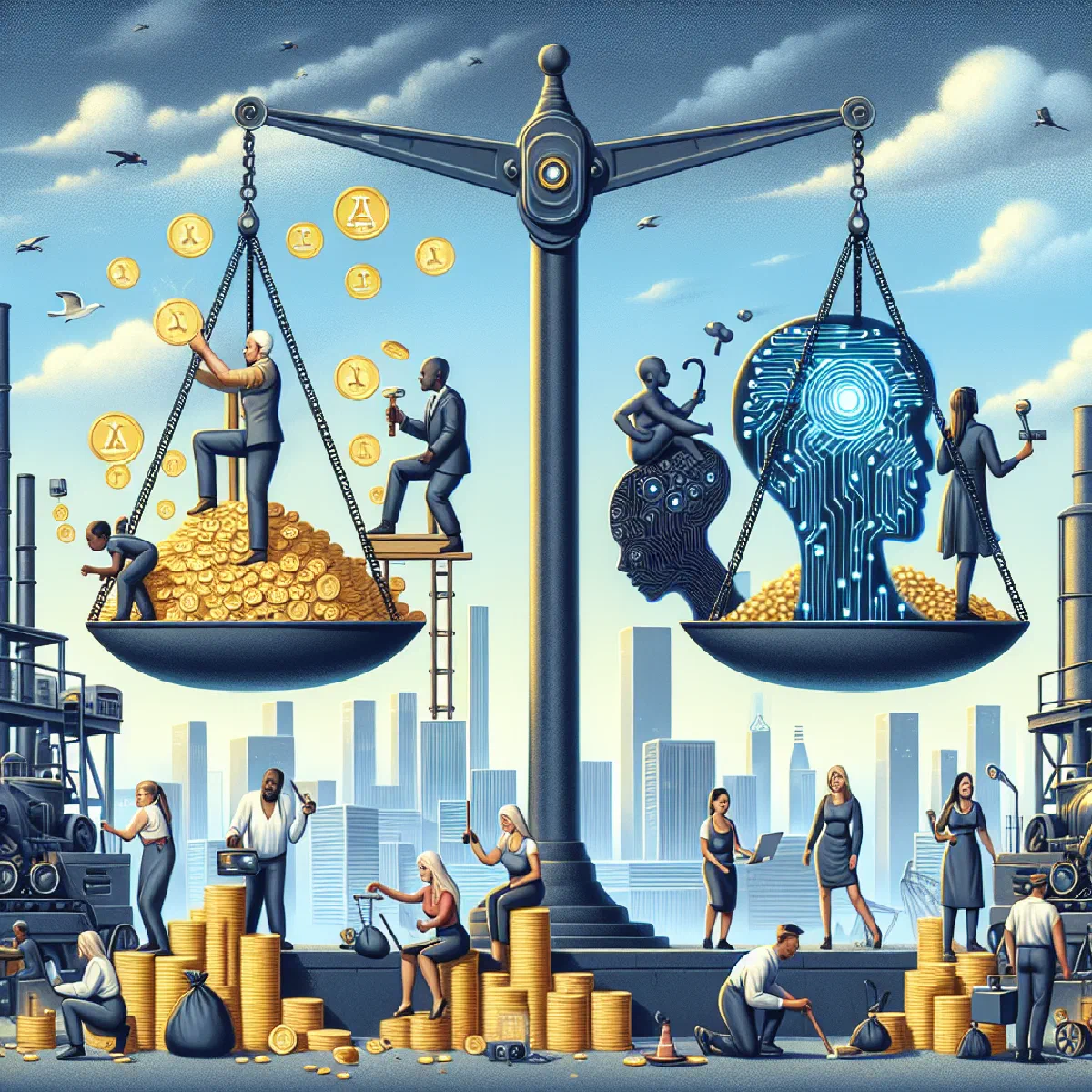
Explore how AI adoption can widen income inequality, affecting job demand and wages, while highlighting the need for skill development and infrastructure.
The International Monetary Fund (IMF) has warned that the increasing use of artificial intelligence (AI) could exacerbate income inequality on a global scale. The adoption of AI is likely to reduce labour demand and wages for workers in sectors that are not highly augmentable by AI, pushing them towards poverty. On the other hand, tech-savvy and younger workers who can harness AI to enhance their productivity may earn increased wages, creating a wider pay gap. The IMF also highlighted that wealthier countries, despite being more exposed to AI-related disruptions, are better prepared to benefit from AI adoption, while low-income countries are underprepared. Analysis: This article emphasizes the potentially negative impact of AI on income inequality at both the individual and country level. It suggests that while AI has the potential to enhance productivity and increase wages for some workers, it could also lead to job losses and reduced wages for others, widening the income gap. Additionally, the article highlights the importance of digital infrastructure and skill development for countries to harness the benefits of AI. Overall, it presents a nuanced view of the potential implications of AI adoption, emphasizing the need for measures to mitigate inequality.
https://www.theeastafrican.co.ke/tea/business/imf-tech-could-worsen-income-inequality-4497728
Nobody takes you aside anymore
Print taught a generation when to stop. What we lose when the machines absorb the constraints that used to form us.
Your AI agents need a water cooler
Coordination is a property of the room, not the org chart. What that means when your coworkers are agents.
On the death of the author and the birth of the detector
Why worrying about AI authorship is lazier, and more prejudiced, than it looks.
The work of being available now
A book on AI, judgment, and staying human at work.
The practice of work in progress
Practical essays on how work actually gets done.
Atlassians choose where they work, every single day. Download our free report to see what we’ve learned as a result.
Explore Atlassian's insights on flexible work policies and employee satisfaction. Download the free report to learn from their distributed work experience.
The game-changing impact of AI
Explore how AI is revolutionizing healthcare, finance, education, retail, and HR, creating new opportunities in 2024 and beyond.
A learning experience platform uses an AI-driven peer learning approach to teach employees in a self-directed way. Find out how LXPs work and are used.
Discover how AI-driven learning experience platforms empower employees with self-directed, personalized training and agile learning solutions.