The article poignantly states, “Generative AI is poised to rewire how many of us work and earn a living. As the technology advances, however, the future of work will not be determined by technological capacity alone. Whether generative AI lives up to its potential to unlock new possibilities for workers and spread shared prosperity or realizes fears of exacerbating inequality and harm depends on the choices that employers, policymakers, technologists, and civil society make.” This encapsulates the article’s central thesis on the dual nature of AI’s impact and the …
Marc Benioff’s critique of Copilot is encapsulated in his statement: “When you look at how Copilot has been delivered to customers, it’s disappointing. It just doesn’t work, and it doesn’t deliver any level of accuracy.”
In the article, the feud between Salesforce CEO Marc Benioff and Microsoft’s AI tool, Copilot, is highlighted as Benioff criticizes Copilot’s lack of efficacy and compares it unfavorably to Microsoft’s past failed assistant, Clippy. Benioff …
The article explores the potential of AI, specifically neuro-symbolic AI and OpenAI’s o1 model, to transform the legal profession by emulating both intuitive (“thinking fast”) and analytical (“thinking slow”) processes, akin to the cognitive theories of Daniel Kahneman. It recounts the Hillsborough disaster where, despite initial “fast” judgments, it took …
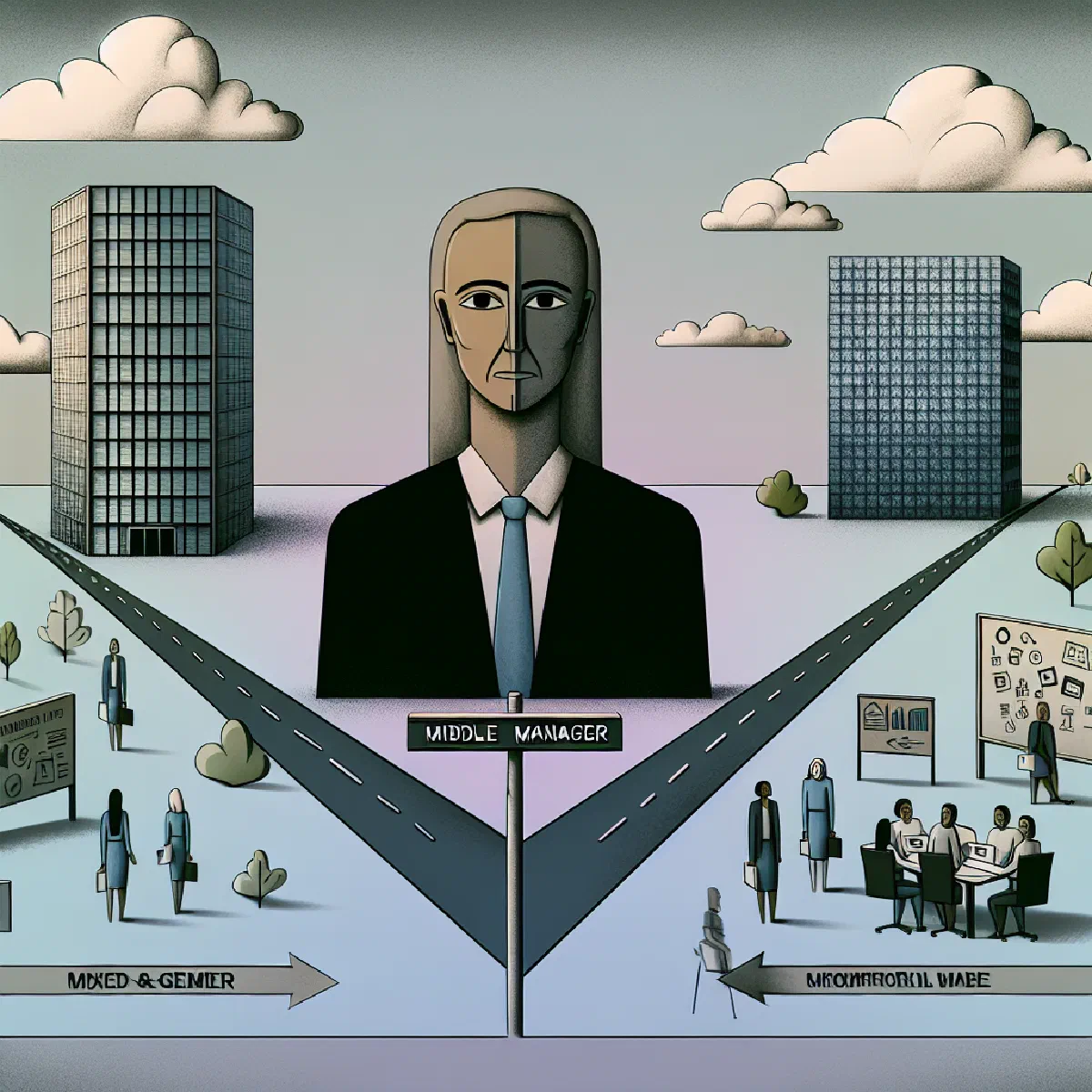
The article addresses the challenges middle managers face in navigating return-to-office (RTO) mandates while balancing leadership expectations and team dynamics. The central thesis posits that middle managers often find themselves in a dilemma, caught between executive directives and the diverse needs of their teams. Despite research indicating general discontent with rigid workplace policies, executive …
In Stefano Puntoni’s study, AI chatbots programmed to demonstrate empathy were found to alleviate feelings of loneliness among users, emphasizing AI’s potential beyond business and productivity enhancements. The research, co-authored with scholars Julian De Freitas, Ahmet Kaan U?uralp, and Zeliha U?uralp, involved five experimental conditions that illustrated how chatbots’ …
“This new partnership will help colleges and their faculty further bridge the gap between education and the evolving demands of the labor market. By aligning our curriculum with real-world skill requirements, we empower our students to enter the workforce confidently and competently, ready to contribute and succeed in their chosen careers.” - Dr. Sukhwant Jhaj
The article discusses a new educational technology initiative aimed at bridging the gap between academic experiences and workforce skills. The collaboration …
The article delves into the persistent challenge of getting responses to emails in an era saturated with digital communication. Despite the plethora of communication tools available, email remains a fundamental component of organizational interaction. However, the inundation of emails, often exceeding 120 per day for the average office worker, leads to many emails being ignored. …
The article “Can a Single Prompt Reliably Predict Your Learners’ Needs?” explores the potential of using GPT-4 to anticipate learner reactions and needs within instructional design. Building on research by Hewitt et al. (2024), which demonstrated a high correlation between GPT-4’s predictions and human responses (r = 0.85), the article examines whether AI can effectively simulate learner …
“Inadequate pedagogical support from the organization could lead to situations where online lectures were listened to amidst other tasks, or training was completed during the quieter hours of the night, at the end of a long shift.”
The article explores the challenges of remote learning and innovation in police and technology sector organizations, as examined by Soila Lemmetty of the University of Eastern Finland. It argues against the notion that employees should solely manage their learning in …
“I think that most people are underestimating just how radical the upside of AI could be, just as I think most people are underestimating how bad the risks could be.”
In Dario Amodei’s essay “Machines of Loving Grace,” the central thesis argues that the potential benefits of powerful AI far outweigh the risks if managed correctly, presenting a transformative and optimistic vision for the future. Amodei, CEO of Anthropic, challenges the perception of him as an AI pessimist by outlining a scenario where AI functions …