When and why to create a product glossary for your team
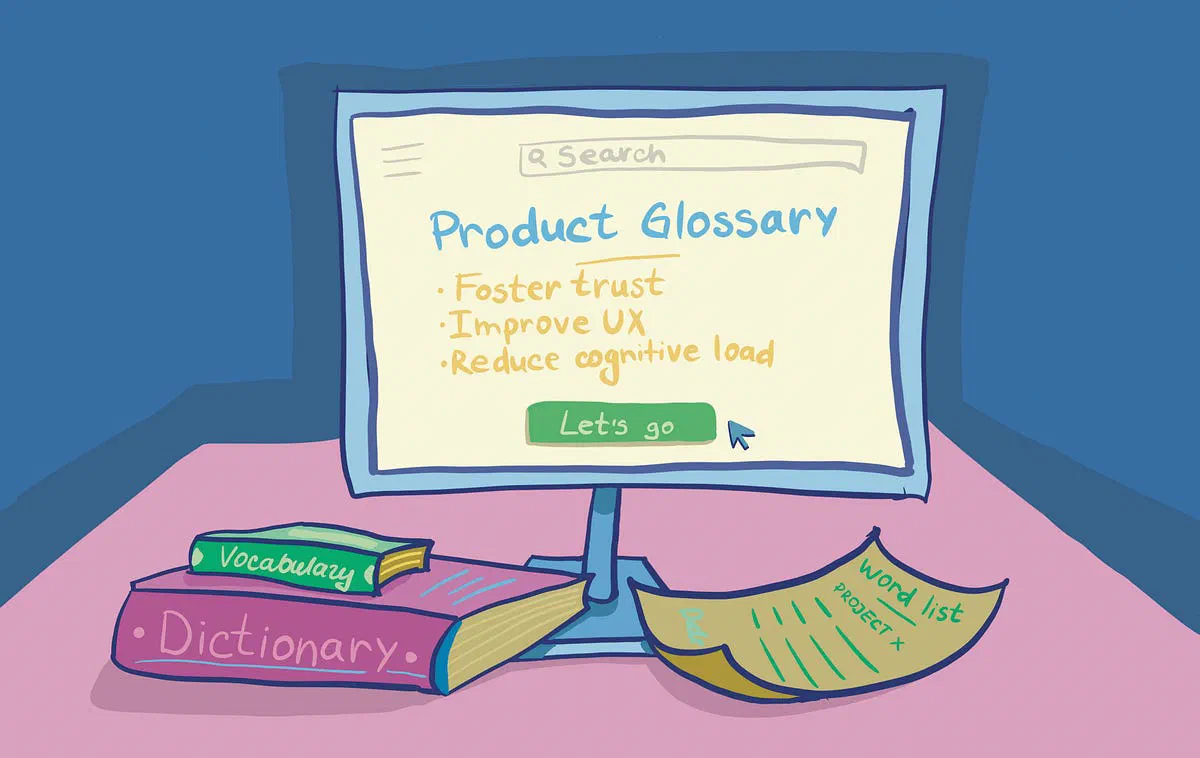
Enhance team communication and user experience by creating a product glossary that ensures consistent, accurate information across your tech organization.
“A regularly maintained glossary ensures that people get only correct and current information. For the product it benefits in mitigating legal risks associated with outdated or inaccurate communications.”
Understanding the importance of a product glossary for your tech team
In today’s fast-paced technological landscape, maintaining consistent and clear communication across all channels is paramount. The recent article by Lisa Vorobeva underscores the transformative potential of a well-crafted product glossary, a tool that can fundamentally enhance both internal operations and user experiences.
What is a product glossary?
A product glossary is not just a list of terms; it’s a strategic asset that ensures uniformity in how a company communicates internally and externally. By defining and cataloging the specific language used within a tech product, from customer-facing microcopy to internal team communications, a glossary operates as a single source of truth.
Benefits of a glossary
Foremost among the benefits, a glossary fosters trust by providing users with consistent and accurate information, reducing linguistic insecurity. This consistency is vital in shaping positive user experiences, aiding in navigation, and lowering cognitive load by making terms recognizable and memorable.
Internal collaboration
A product glossary is transformative internally, facilitating seamless collaboration across various teams such as product design, UX research, and marketing. It ensures all team members are on the same page, speaking the same language, thereby enhancing efficiency and coherence in communications.
Building and maintaining the glossary
The article provides a detailed guide on creating a product glossary, emphasizing the need for a flexible structure and user-friendly format. Essential columns include descriptions, terms, stop words, and links to design systems, ensuring the glossary is a dynamic and practical tool.
Maintaining the glossary involves regular updates and collaborative management, making it an evolving asset that adapts to the changing needs of the product and its users.
The future of design systems
Looking forward, a well-maintained glossary lays the foundation for integrating content into broader design systems, ensuring consistency across all touchpoints. It’s an iterative process that mirrors product development methodologies, ensuring the glossary remains relevant and impactful.
In conclusion, investing in a product glossary is a forward-thinking strategy that empowers teams, enhances user experience, and ensures cohesive and accurate communication across all platforms—a practical step towards achieving outstanding results.
Nobody takes you aside anymore
Print taught a generation when to stop. What we lose when the machines absorb the constraints that used to form us.
Your AI agents need a water cooler
Coordination is a property of the room, not the org chart. What that means when your coworkers are agents.
On the death of the author and the birth of the detector
Why worrying about AI authorship is lazier, and more prejudiced, than it looks.
The work of being available now
A book on AI, judgment, and staying human at work.
The practice of work in progress
Practical essays on how work actually gets done.
Article analysis: Every business’s goal: Cut costs and increase revenue
Unlock cost-saving strategies and revenue growth with AI insights, enhancing customer experiences and driving efficiency in tech businesses.
Why customer tools are organized wrong
This article reveals a fundamental flaw in how customer support tools are designed—organizing by interaction type instead of by customer—and explains why this fragmentation wastes time and obscures the full picture you need to help users effectively.
Embracing AI in education: Balancing integrity with future workforce demands
Explore how educators can balance academic integrity with the need for AI literacy, preparing students for a future-driven workforce.